
Building Trust Through Culture and Access
A Year-Round Approach to Hispanic and Latino Outreach
Guest Author:
Ingrid Palacios
Multicultural Outreach Program Manager
New England Donor Services
As we celebrate National Hispanic Heritage Month, we recognize the rich cultures, histories, and contributions of the more than 68 million Hispanics and Latinos who call the United States home. Representing approximately one in five Americans, Hispanic and Latino communities are an increasingly important part of the communities we serve. Achieving our shared mission of saving and healing lives through organ and tissue donation requires ensuring that all communities have equitable access to education, resources, support, and trusted sources of information. Trust is often the foundation upon which meaningful conversations about donation and transplantation begin.
In my role at New England Donor Services (NEDS), I lead Spanish language education, outreach, and community engagement efforts focused on Hispanic and Latino communities throughout our service area. Over the years, I have learned that effective outreach in Hispanic and Latino communities begins long before conversations about donation take place. It starts with building relationships, creating culturally meaningful opportunities for engagement, and ensuring that information is accessible in ways that resonate and align with the values of the communities we serve.
Listening, Learning, and Understanding the Communities We Serve
My perspective on community engagement has been shaped by my outreach work and my previous experience approaching and supporting donor families in hospital settings. Working closely with families from diverse cultural, linguistic, and socioeconomic backgrounds provided valuable insight into the factors that influence how individuals and families understand, discuss, and make decisions about donation.
I often witnessed how trust was built when families were able to communicate in their preferred language and felt their cultural values were understood and respected. For many Hispanic families, this meant recognizing the importance of faith and their belief in miracles, creating space for extended family members to participate in donation discussions, and understanding that decisions were often viewed through a collective family lens rather than an individual one. Those experiences continue to inform the way I approach education, outreach, and community engagement today.
Meaningful outreach is never developed in isolation. Much of my perspective has also been shaped by opportunities to collaborate with colleagues across the country through professional organizations dedicated to advancing donation and transplantation. Sharing ideas, best practices, challenges, and successes with peers from diverse regions and backgrounds has strengthened my understanding of the communities we serve and reinforced the importance of collaboration, cultural responsiveness, and continuous learning.
That commitment to continuous learning has influenced a variety of initiatives, including a series of Interamerican Organ Donation and Transplantation Forums conducted entirely in Spanish. Bringing together multidisciplinary experts from Latin America, Spain, and the United States, these forums created opportunities to better understand the realities, challenges, and successes of donation and transplantation across the Spanish-speaking world. Hundreds of participants from more than 20 countries joined these conversations, creating a valuable space for shared learning and helping us better understand the diverse cultural perspectives, healthcare experiences, and beliefs that can shape conversations about donation and transplantation among many of the immigrant communities we serve.
These experiences reinforced a principle that continues to guide my work today: effective education is not only about teaching but rather about listening and learning.
Building Trust Through Language, Education, and Community Engagement
Language access is a critical component of healthcare access.
For many Hispanic and Latino families, language remains one of the main barriers to accessing healthcare information and engaging in conversations about donation and transplantation. While translation is essential, meaningful engagement requires more than translated materials. It requires creating resources, platforms, and opportunities that are culturally relevant, accessible, and reflective of the communities we hope to serve.
With that goal in mind, Done Vida New England was created as NEDS’ Spanish-language outreach platform. Through Spanish educational content, community engagement initiatives, media outreach, social media, the development of NEDS’ Spanish-language website, and culturally relevant resources, our platform seeks to make donation and transplantation information more accessible to Spanish speaking communities.
Over the years, this work has included partnerships with Spanish language media outlets, educational presentations, health fairs, school-based initiatives, donor registration campaigns, community events, career panels, bilingual programs and storytelling opportunities designed to meet people where they are. Together, these efforts help increase awareness while creating opportunities for meaningful dialogue and informed decision making.
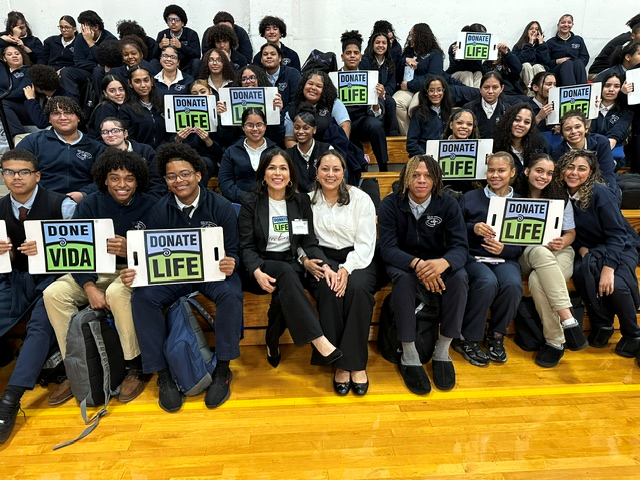
Pictured: (center) Ingrid Palacios, Multicultural Outreach Program Manager at New England Donor Services and students at Notre Dame Cristo Rey Catholic High School during a Done Vida Educational Program Assembly
When communities can access information in their preferred language and through trusted channels, they are better positioned to engage in conversations about donation and transplantation.
Partnerships as a Catalyst for Health Equity
No meaningful outreach effort succeeds alone.
Community organizations, healthcare partners, transplant professionals, volunteers, faith leaders, media partners, and advocates all play a vital role in expanding educational opportunities and building trust within the communities we serve.
One good example is the NEDS Health Equity Symposium, an initiative established while serving on our organization’s Social Equity Steering Committee. Now entering its sixth year, the symposium has become a signature event held during Hispanic Heritage Month, bringing together donation and transplantation professionals to highlight the work of Hispanic and other multicultural leaders in our field while exploring and sharing strategies to reduce disparities and improve equitable access to transplantation for the diverse communities we serve.
The symposium’s continued success reflects the power of internal collaboration and a shared commitment to health equity. More importantly, it demonstrates how collective action and diverse perspectives can help strengthen the donation and transplantation system for all communities.
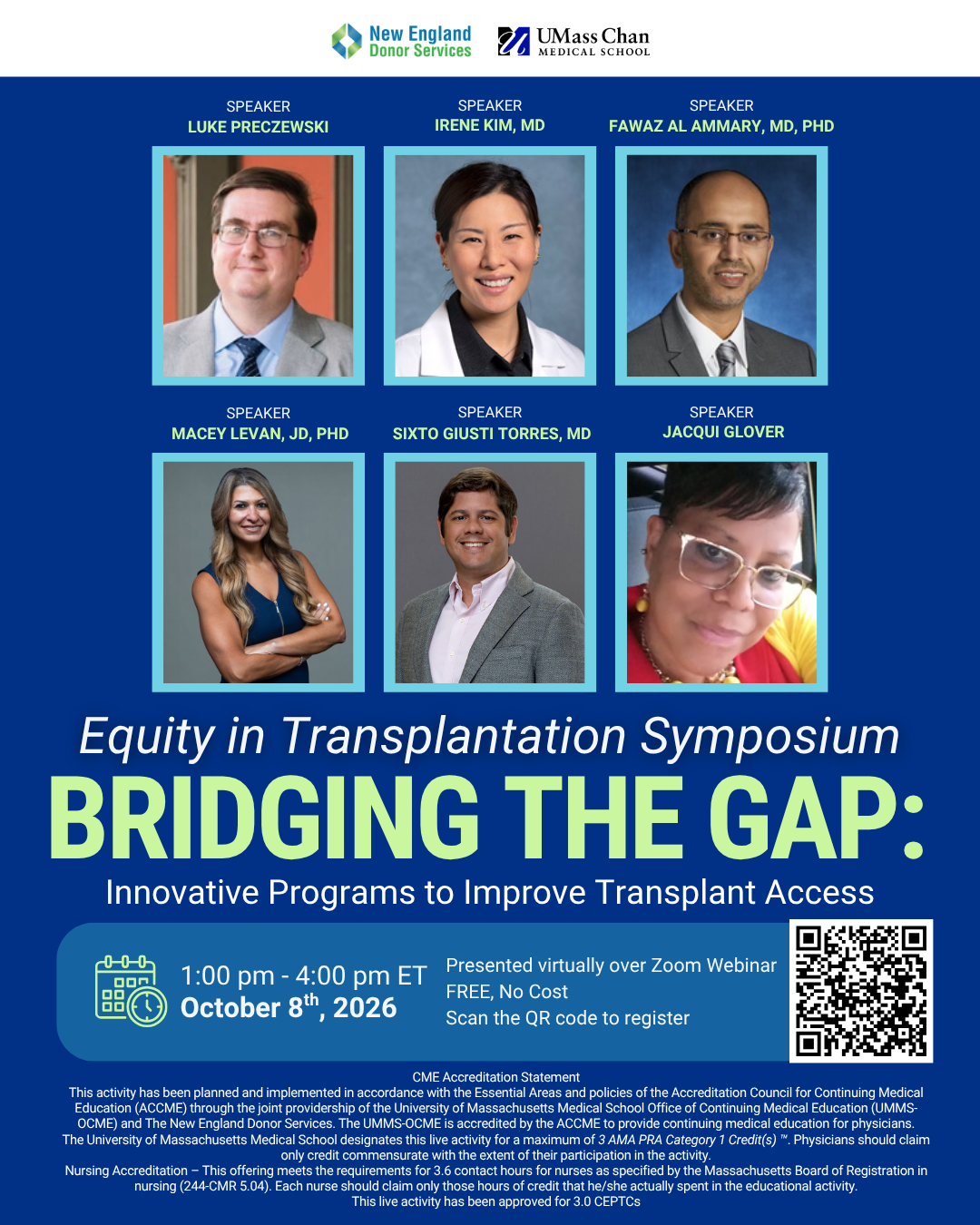
Pictured: In partnership with UMass Chan Medical School, NEDS invites the donation and transplantation community to their Hispanic Heritage Month free signature symposium event on October 8, 2026 at 1PM via Zoom Webinar.
Honoring Donor Heroes Through Culture and Remembrance
One initiative that has been especially meaningful to develop, lead and grow is NEDS/ Done Vida New England’ annual Day of the Dead/Día de los Muertos Ofrenda and Remembrance program.
Inspired by a tradition deeply rooted in many Hispanic and Latino cultures, this bilingual program was created to honor donor heroes while providing families and communities with a meaningful space for remembrance, reflection, and connection. Through colorful ofrendas, bilingual donor stories, heartfelt remembrance ceremonies, community participation, and educational opportunities, the program celebrates the lasting legacies of those who gave the gift of life.
This outreach program is made possible through internal collaboration among NEDS departments and involves donor families, hospital partners, community organizations, artists, volunteers, media partners, healthcare professionals and the community at large. Together, these partnerships help create a meaningful experience that honors donor heroes while fostering community engagement.
What began as a culturally grounded remembrance initiative has evolved into a powerful example of how culture can strengthen trust and community connections. Last year’s program reached more than 3,000 individuals through in person participation, virtual engagement, and media coverage. This year, the program has expanded to four locations across three states through partnerships with well-known community organizations, with projected participation expected to double. Donor families share their loved ones’ stories, community members engage in conversations about donation, and attendees learn about organ and tissue donation in an environment that feels welcoming, familiar, and meaningful.
The experience has reinforced an important lesson: building trust through culture can create powerful opportunities for education, healing, and connection.
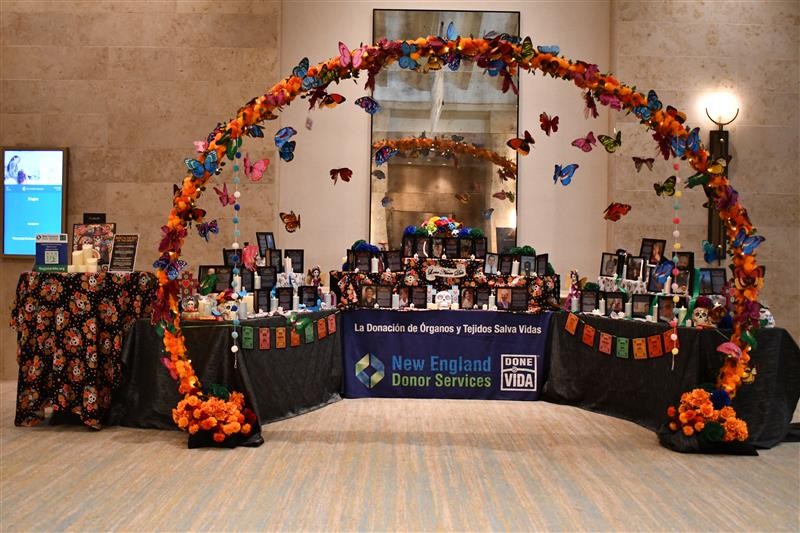
Pictured: New England Donor Service’s Day of the Dead/Dia de los Muertos Ofrenda at the 2026 AOPO Annual Meeting honored donor families across their service area, featuring photographs and meaningful tributes celebrating the lives and legacies of those remembered.
Lessons for the Donation Community
As donation professionals, we all share a responsibility to build trust, expand access, and ensure that Hispanic and Latino communities are meaningfully represented and better served through our outreach, education, and family support efforts. My experience has reinforced several important principles:
- Effective outreach requires more than translating words. It requires culturally responsive communication that builds trust and makes information meaningful and accessible.
- Hispanic and Latino communities are not monolithic; meaningful outreach requires cultural competence and a willingness to learn.
- Partnerships with trusted community organizations amplify reach, credibility, and impact.
- Effective education begins with listening as much as teaching.
- Cultural traditions can create powerful opportunities to honor donor heroes and connect communities with the mission of donation
Looking Ahead
National Hispanic Heritage Month is an opportunity to celebrate the diversity, traditions, and contributions of Hispanic and Latino communities. It is also a reminder that building trust, expanding access, and advancing health equity require a year-round commitment.
By investing in language access, culturally responsive outreach, strong partnerships, community-centered programs, and the intentional recruitment and support of bilingual and multicultural professionals, we can better serve Hispanic and Latino communities while creating more equitable access to donation and transplantation.
Together, these efforts can help build stronger connections between the communities we serve and the lifesaving mission of donation and transplantation.
About the Author
New England Donor Services‘ (NEDS), interactive Day of the Dead/Dia de los Muertos Ofrenda was proudly featured at the 2026 AOPO Annual Meeting in Orlando, Florida.
Ingrid Palacios is the Multicultural Community Program Manager at New England Donor Services (NEDS), where she leads Spanish-language education, outreach, and culturally responsive community engagement initiatives serving Hispanic, Latino, and other diverse communities throughout New England. With more than 15 years in the organ and tissue donation field, Ingrid brings a unique perspective shaped by both community outreach and direct work with donor families. A recognized thought leader and frequent speaker at local, regional, national, and international conferences, she served for four years on the Association of Organ Procurement Organizations (AOPO) Diversity, Equity, Inclusion, and Belonging (DEIB) Committee, including as Chair, and has held leadership roles in other national organizations focused on advancing health equity, diversity, and access within donation and transplantation.