
Listening Before Leading
Why Effective Education Begins with Understanding
Guest Author:
Racha Kardahji
Director, Marketing & Communications
Gift of Life Michigan
When organizations want to change behavior, it’s tempting to start with the solution.
Develop the campaign.
Create the message.
Launch the advertisements.
Measure the results.
But the most effective communication doesn’t begin with what we want to say. It begins with what people need to hear.
At Gift of Life Michigan, we believe that meaningful public education starts with listening. Before we create educational resources, launch campaigns or ask people to make important decisions, we first seek to understand the audience we’re trying to reach.
Because assumptions, even well-intentioned ones, can become barriers.
Replacing Assumptions with Insight
One of the most important questions we ask ourselves is simple: Are we solving the right problem?
When we looked at donor registration among Michigan teens receiving their first driver’s license, we knew we had an opportunity to better support young people at a pivotal decision point. We could have assumed we knew why many teens weren’t registering. Instead, we chose to ask.
We partnered with an independent research agency specializing in focus groups and survey research. Our team defined the audiences we wanted to understand, using factors such as age, geography, socioeconomic background and community characteristics to develop participant personas. The agency used those criteria to recruit participants, helping us intentionally seek a mix of perspectives.
We began with qualitative research: six focus groups with teens and parents in the city of Detroit, Oakland County and rural Northern Michigan. Separate groups of teens ages 14-17 and parents allowed us to hear from families across urban, suburban and rural communities and different socioeconomic and educational backgrounds.
The research agency independently facilitated the sessions on behalf of Gift of Life Michigan. The agency developed the questions and research approach based on our objectives, and our team reviewed and approved the methodology before implementation. Using an outside facilitator gave participants space to share their perceptions, questions and concerns while allowing our team to listen rather than lead the conversation.
Those conversations surfaced themes we could explore more broadly. Teens told us they needed more education and clearer information, including clarity around the difference between living and deceased donation. We also learned that facts and positive stories resonated.
With those insights in hand, we moved from listening deeply to testing at scale. An online survey included 300 teens ages 14-17 who were new or rising drivers, randomly selected across southern Michigan media markets from Detroit through Grand Rapids and Kalamazoo. The sample was stratified to be representative of the teen population. A separate telephone survey reached 500 parents and guardians of teens in the same age range and geographic area. Both surveys were conducted at a 95% confidence level.
Using qualitative and quantitative research together proved particularly valuable: The focus groups helped us discover; the surveys helped us validate. The conversations helped uncover issues we may not have thought to ask about, while the surveys allowed us to understand how broadly those perceptions were shared.
For organizations considering a similar approach, one of our biggest concerns is simple: Listen before you measure. Define who you need to hear from and why. Give those audiences opportunities to tell you what matters to them. Then use what you learn to build and test your hypotheses at a larger scale.
Our goal wasn’t to validate what we already believed. It was to be willing to discover that the barrier-and therefore the solution-might be different from what we assumed.
Research At a Glance
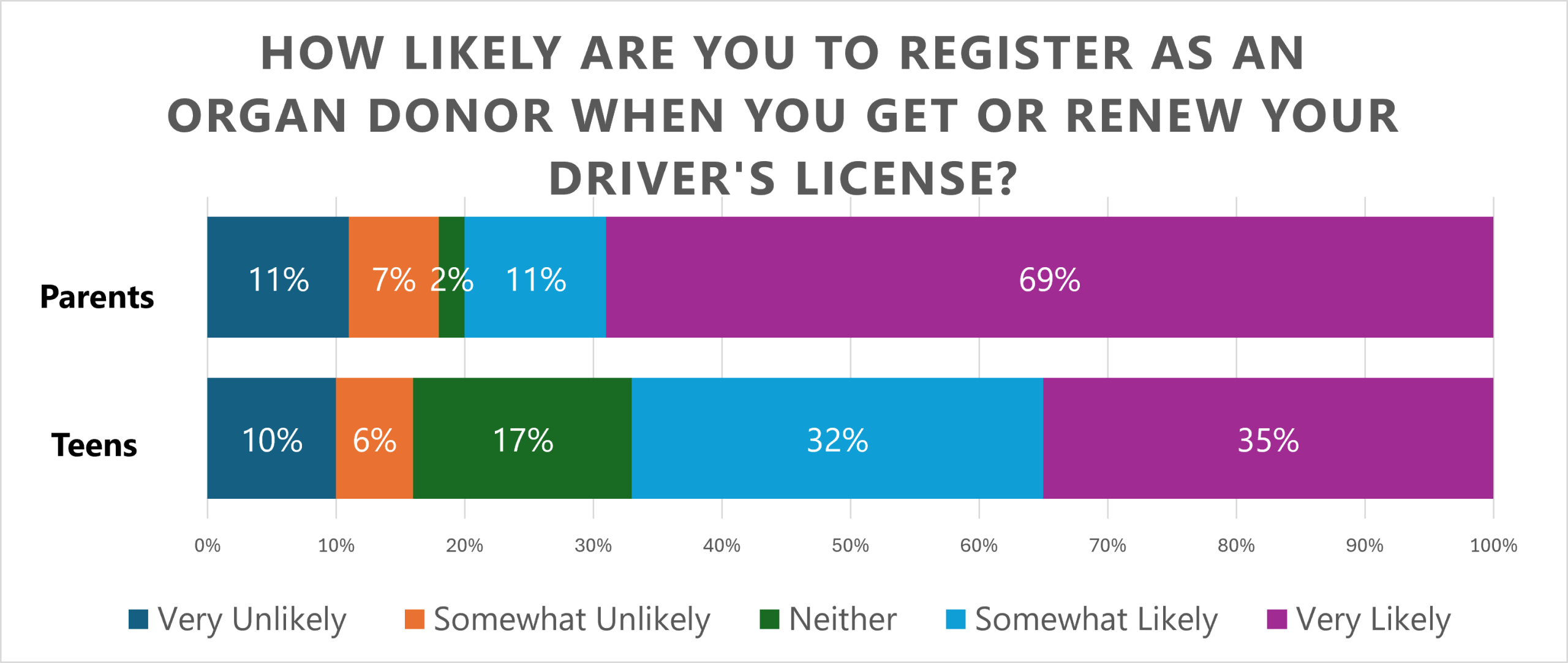
Pictured: Before learning that organ donation registration was about deceased donation, 69% of parent respondents and 35% of teen respondents said they would register to be donors.
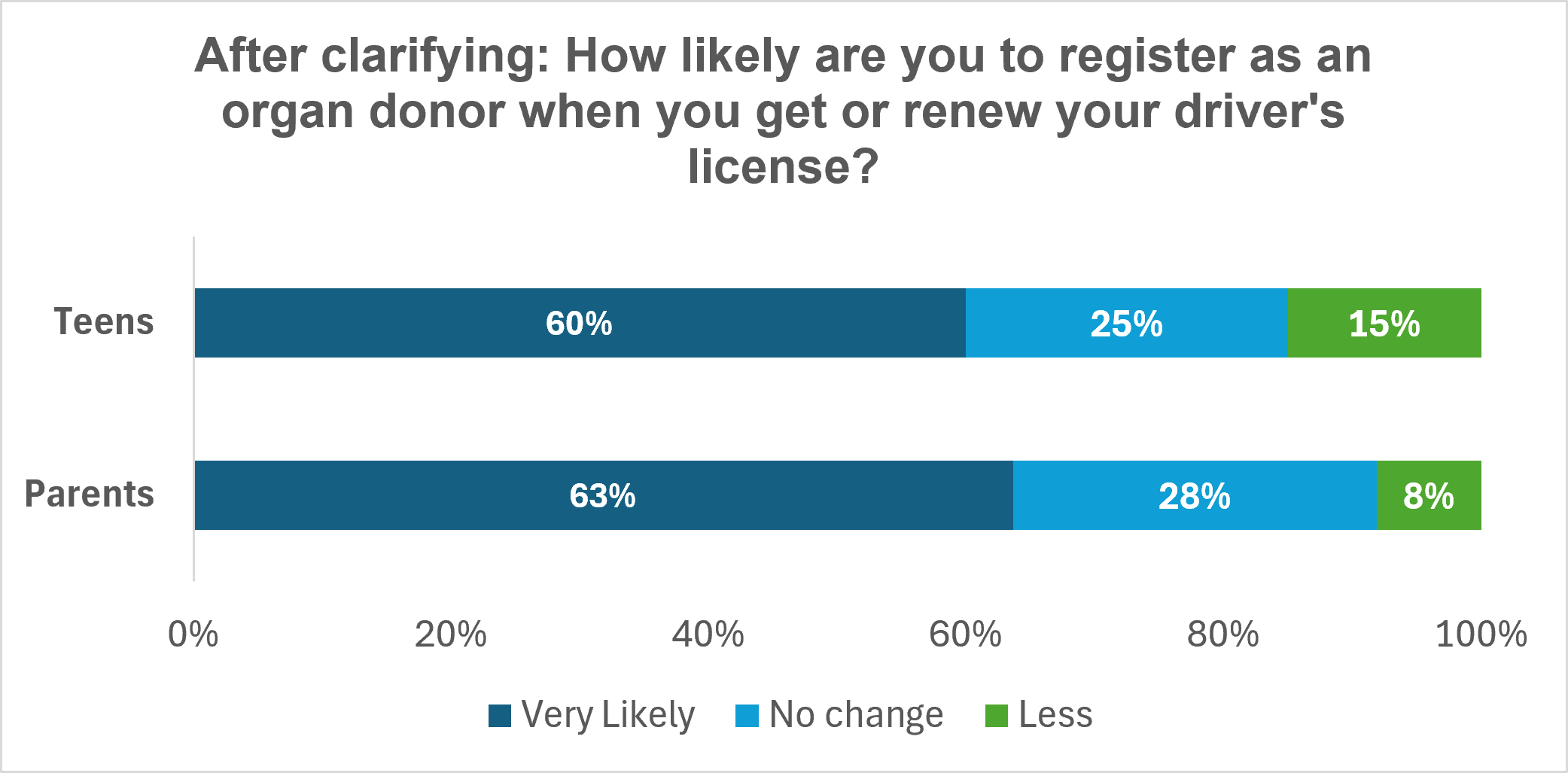
Pictured: After clarifying that organ donation is deceased donation, teen respondents who would register jumped to 60%.
The Answers Weren’t What We Expected
It’s easy to assume that if people aren’t taking action, they simply need more awareness. Our research suggested something different.
Most teens already knew they would be asked about organ donation when obtaining a driver’s license. Awareness wasn’t the issue.
Many teens weren’t opposed to organ donation. They lacked enough information to feel confident in the decision they were being asked to make. Others misunderstood what joining the Michigan Organ Donor Registry actually meant.
That distinction fundamentally changes how you approach education.
When the challenge is awareness, you communicate more. When the challenge is understanding, you educate differently.
One Insight Reshaped Our Approach
Among the most significant findings was one that could have easily been overlooked without research.
Many teens believed or weren’t sure whether joining the Donor Registry meant they could be asked to donate an organ while they were still alive.
After learning that the registry applies only to organ donation after death, 60% of teens said they were more likely to register. Parents showed a similar shift, with 63% reporting they were more likely to register after receiving the same clarification.
The takeaway wasn’t simply that one misconception existed. It was that a single clarification had the power to change how people viewed an important decision.
That is the value of listening before communicating.
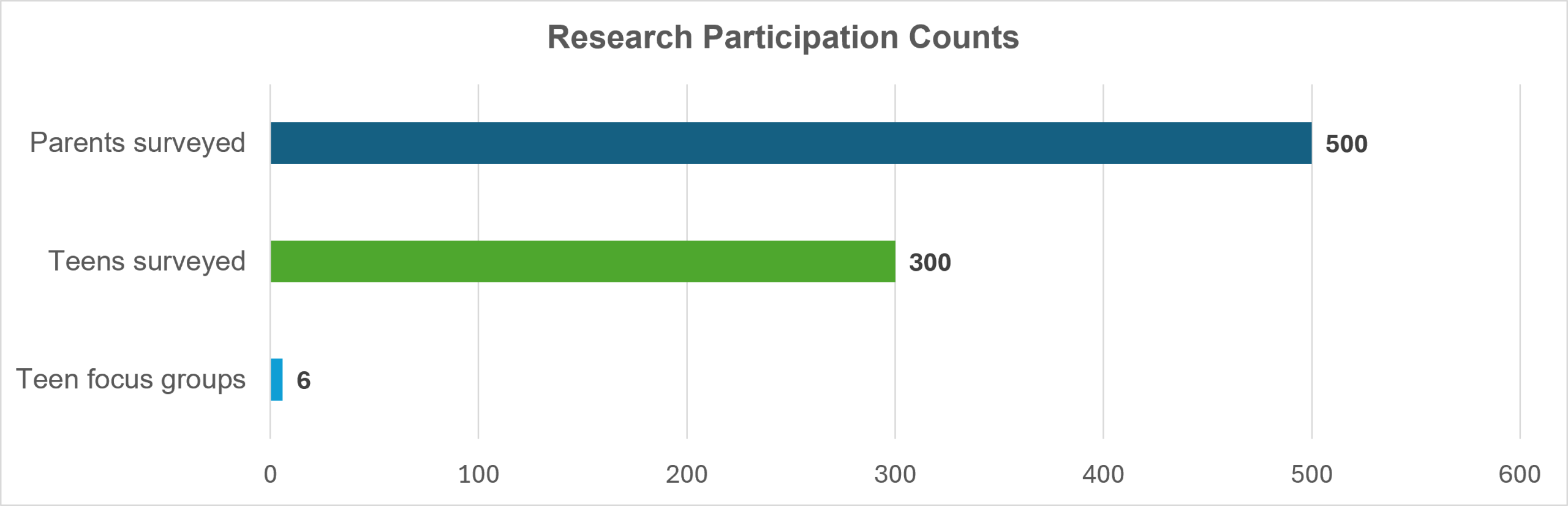
Pictured: 500 parents and 300 teens were surveyed, while 6 focus groups took place across the state to gather insights and perceptions.
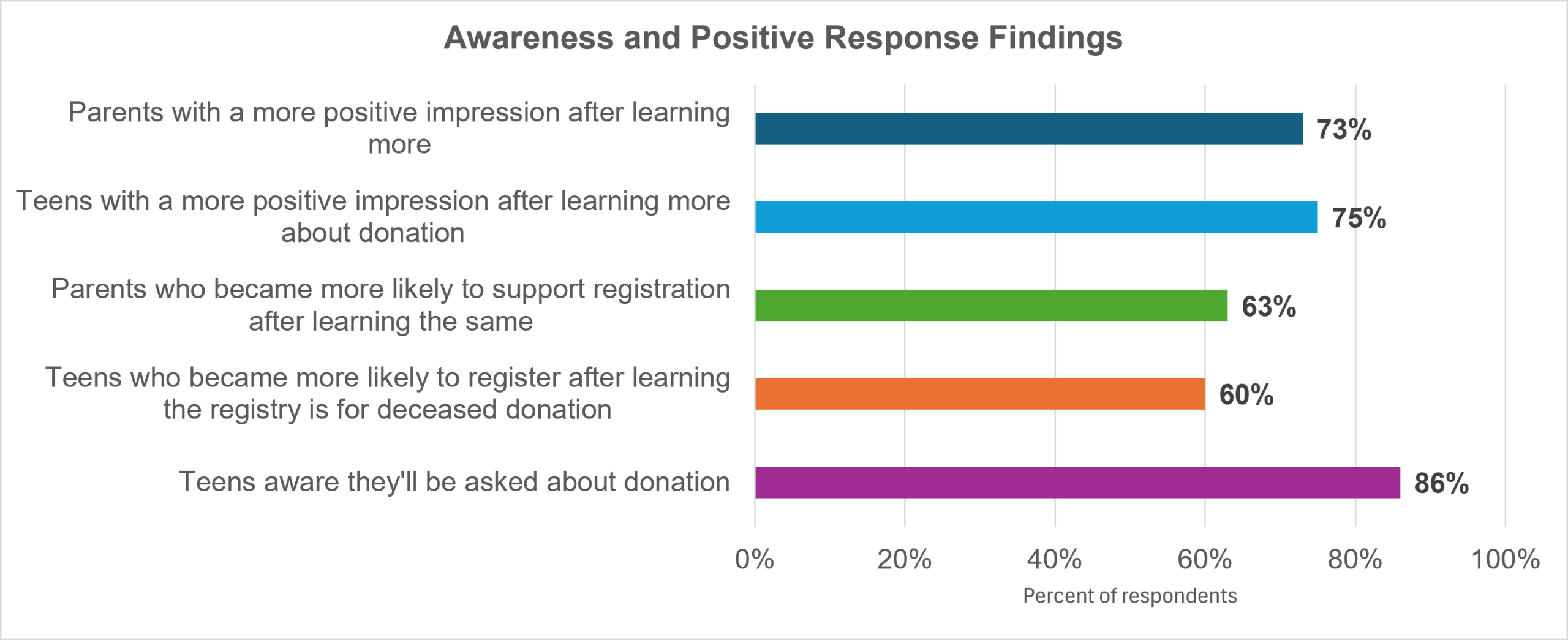
Pictured: Changes in responses from both teens and parents once they learn that organ donation registration is about deceased donation versus living donation.
Marketing Isn’t About Messages. It’s About Understanding
Marketing is often viewed as the function responsible for creating campaigns after decisions have already been made. We see it differently.
The most valuable role marketing and communications can play begins much earlier:
-
- Uncovering what people know
- Identifying where misunderstandings exist
- Understanding what influences behavior
- Translating insights into audience focused education
In healthcare, that responsibility carries even greater weight. When people are making decisions that affect their health, their families or, in the case of organ donation, the future availability of lifesaving transplants, education cannot be based on assumptions.
It must be based on evidence.
Education is Part of Access
The research also reinforced something we increasingly recognize across healthcare: access begins long before a patient needs care.
It begins with awareness, trust, understanding and informed decision-making.
Every person waiting for a transplant depends on a community that understands organ donation well enough to make informed choices long before donation is ever possible.
That means education is more than outreach. It is part of the pathway that supports access to transplantation. By identifying knowledge gaps early, addressing misconceptions thoughtfully and creating educational resources based on evidence rather than intuition, we can help remove barriers before they become missed opportunities.
Listening is Where Meaningful Change Begins
The research didn’t only change how we communicate with teens. It changed how we think about communication itself.
Today, those insights are shaping the educational resources we’re developing for students, helping ensure they receive accurate, age-appropriate information before they are ever asked to join the Donor Registry.
But perhaps the most important lesson extends beyond organ donation.
Whether we’re working to improve public health, encourage preventative care or help communities understand complex healthcare decisions, the principle remains the same: The best communication doesn’t begin with what we want to tell people. It begins with listening to what they need to understand.
What OPOs Can Take Away
Research allows us to move beyond assumptions. Education transforms the understanding into informed action. Together, they create stronger pathways to transplantation— not by telling people what to decide, but by ensuring they have the knowledge to decide for themselves.
Before developing the next campaign or educational resource, consider what assumptions you may be making about your audience and how you can test them. Focus groups, surveys, community conversations and other feedback channels can help OPOs identify the questions, concerns, or misconceptions that matter most. Those insights can then guide more relevant education and outreach, ultimately supporting more informed decisions and helping save more lives through organ donation and transplantation.
About the Author:
Gift of Life Michigan’s research was presented at the 2026 AOPO Annual Meeting in Orlando, Florida.
Racha Kardahji is the Director of Marketing and Communications at Gift of Life Michigan, where she leads the organization’s communications, marketing and storytelling efforts to inspire more people to support organ, eye, and tissue donation. Before joining Gift of Life Michigan in 2022, she helped expand the nationally recognized Gift of Life Michigan Campus Challenge through her work at Redhead Creative Consultancy. A first-generation Palestinian-Lebanese immigrant, Racha is passionate about building trust across cultures and increasing awareness about the lifesaving impact of donation.